The Republic of Dreams: A Reverie by G. Garfield Crimmins

Book #7 for 2009

I’ve always been fascinated with illustrated novels, and when I came across a copy of G. Garfield Crimmin’s “The Republic of Dreams” on bookmooch, I was eager to add it to my growing collection.

I had high hopes as I first skimmed the book, delighted to find that the contents were intact, even the detachable ephemera — maps, a passport, telegrams, a license card, and a whole set of postcards.

But as I read the story, my initial excitement deflated, replaced with that horrible, hollow feeling I get when a book that promises so much turns out to be a big disappointment.

The novelty of the illustrated novel is in seeing two different media — the written word and visual art– meld together in a visual narrative. My beef with The Republic of Dreams is that while the book is lovely to look at (and it must’ve cost a fortune to publish the book too), the story leaves so much more to be desired.

I found the story hard to follow, with a contrived hedonism that made it cheesy.

The author G. Garfield Crimmins finds himself in La Republique de Reves (The Republic of Dreams), where he is known as Victor La Nuage – the alter-ego of his waking self. Victor realizes he is a citizen of the Republic of Dreams, and he was sent on a mission to the “real world” to combat the Republic’s greatest enemy: The League of Common Sense, a movement bent on stifling imagination and pleasure.

(It reminds me of something out of a Jasper Fforde novel except it’s not funny because Crimmins is serious about it, which makes me think he was either a) horny (haha I had no idea this would turn out to be erotica!) b) high c) very very drunk or d) all of the above while he was creating this).

I get the feeling Crimmins wanted the Republic of Dreams to be a place everyone would want to live in, but I think he was trying too hard. He was overzealous in the exposition — “The Republic of Dreams is the true home of every dreamer, noncomformist, artist, eccentric, lover, and poet — all those who have an instinctive dislike of the narrow limitations of common sense. Its citizens love love, youth, old age, beauty, splendor, wisdom, generosity, music, song, the feast, and the dance. The weather is ideal and festivals occur daily” — and that is just in the flap of the book.

He goes on to devote 16 pages (out of 95) to a “visitor’s guide” to the Republic, and it pushes the envelope already.

Adding to the cheese factor are the bad puns throughout the novel — the national ID is called “Licence Poetique,” Madame Ricochet’s salon is a date hotspot located at the intersection of Avenue of Quivers and Shudders and Sweet Tongue Lane (there is also a Street of Sweet Escape); the capital city is Polis Poeton (city of poets) surrounded by Lake Eros — everything was just really hokey to me, too over the top, and it doesn’t help that you can’t make heads or tails out of the story.

I guess I’ll be keeping the book, just for the heck of it, at the very least it would look good (literally) on my shelf, hahaha, but I don’t think I’ll be reading it again.

You don’t believe me? Read the excerpt here http://www.wwnorton.com/catalog/fall98/crimmins.htm, and you’ll see what I mean.

***
My copy: hardbound, mooched from the US

My rating: 1/5 stars

Photo courtesy of wwnorton.com (http://www.wwnorton.com/cover/004633.gif, http://www.wwnorton.com/catalog/fall98/images/rep10.gif)

Rashomon and Other Stories by Ryunosuke Akutagawa

Book 6 of 2009
Asian book #1 of Diversity Challenge
My first encounter with Ryunosuke Akutagawa was back in freshman English, in my Intro to Fiction Class, when we read “In a Grove.”
I remember we had small group discussions about it, and I couldn’t concentrate because this guy I was crushing on was sitting next to me (tee hee hee) but I remember someone saying that the story was the same as the Japanese film Rashomon by Akira Kurosawa (The film was based largely on In a Grove, incorporating some elements from the short story Rashomon).
I still haven’t seen the movie, but I chanced upon this Akutagawa anthology at Book Sale and it was a 1970 edition (Liveright paperback) with some notes pencilled in the margins, but it was about P40, and I knew I wouldn’t come across it again. (I googled the name pencilled in the inside cover and apparently she’s an American minister of some religious congregation… Oh, in case you’re wondering, I started doing that sort of thing — googling the names inside old books– after watching Whisper of the Heart, hee hee hee).
Ryunosuke Akutagawa was a writer in the modern period (early 20th century) who was disturbed by Japan’s industrialization, and writing was his way of response, with over a hundred works to his name, before committing suicide at the age of 35.
The book contains six medieval Japanese short stories: In a Grove, Rashomon, Yam Gruel, The Martyr, Kesa and Morito, and The Dragon, a varied collection dealing with different aspects of societal values and human psychology. Authentic illustratiions (by M. Kuwata) are interspersed throughout the text.
In a Grove is easily the frontispiece to this collection — it is a tale of crime (rape, murder and suicide) told from five different perspectives. I like the story’s philosophical exploration into the nature of truth — how it is impossible to know the absolute truth, and how easy it is to blur the lines with memory, human desires and motivations, and personal biases.
The next story features the Rashomon, the largest gate marking entry into Japan’s ancient capital, Kyoto. The gate crumbled with the decline of Kyoto, and the Rashomon soon became a nest for thieves and criminals, as well as a place to dump unclaimed corpses. A recently laid off servant vwitnesses an old hag stealing hair from corpses to make a wig, and the encounter changes his life.
Yam Gruel features a bumbling protagonist whose greatest ambition was to eat his fill of this aristocratic delicacy. When he is presented with an opportunity to fulfill his ambition, however, things do not go the way he imagined.
The Martyr was a surprise because of its Christian (and Jesuit, at that) roots – apparently Akutagawa liked dramatizing existing texts and events, and this one was based on volume two of the book Legenda Aurea. This is the story I least enjoyed — probably because it was less subtle in the moralistic aspect.
Kesa and Morito, I read somewhere, was based on a real affair. Kesa and Morito are illicit lovers, and Morito is driven to kill Kesa’s husband. Here’s the quandary — he doesn’t hate the man and he doesn’t love Kesa but he feels Kesa is compelling him to do it. Kesa doesn’t love Morito either, but is fascinated because Morito mirrors the ugliness she sees in herself. Out of guilt, Kesa switches with her husband on the night Morito comes to kill him. It’s also fascinating how the story tests the very thin line between love and hate.
The Dragon is more of a folk tale, like something out of JK Rowling’s Tales of Beedle the Bard. It was also lighter and more humorous than the rest, dealing with a fellow with a big nose who got so tired of being teased about it that he pulls the prank of the century!
I do not read many anthologies because I like meaty novels I can sink my teeth into, but I enjoyed this book, because while the stories offer a moralistic viewpoint, they pose philosophical questions that encourage the reader to ponder the situations presented and reassess his or her own values.
***
my copy: Liveright paperbound edition, 1970
my rating: 5/5 stars

Photo courtesy of: http://www.redvicmoviehouse.com/images/poster/rashomon.jpg (poster)

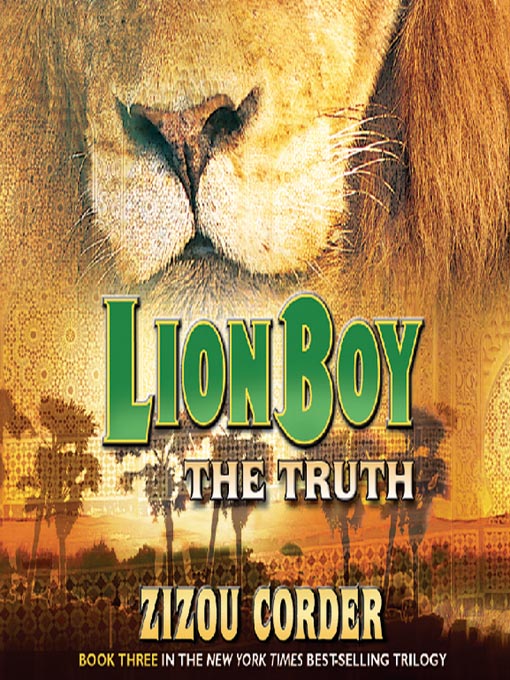
The Lionboy series by Zizou Corder (Conclusion)

Books 4 and 5 for 2009
Lionboy: The Chase
Lionboy: The Truth

My first read for 2009 was the first book of the Lionboy series, which I deemed average, as it started out slow and took a while to pick up.

But getting through the first book was worth it, as the next books in the series prove why Lionboy holds up admirably as a fantasy series.

The series is quite inventive – a boy who can speak Cat; a world with no petroleum; a money-grubbing pharmaceutical giant that creates illnesses to generate a demand for its products; a pack of lions who want to go home – and the whole bliddy circus!

I think the mother-daughter team behind Zizou Corder really got into their groove with the next two books, which had me swiftly turning pages to the end. The story’s framework falls into place, and the story flows more fluidly.

I like the character development in the books, both for the human characters and the animals. Charlie Ashanti, the protagonist, grows on you, with his spunk, intelligence, and Dickensian goodness that shines through without appearing clichéd or contrived.

The rest of the humans make a delightful supporting cast – the misguided (and unlucky) Rafi; Charlie’s unconventional but loving parents Aneba and Magdalen; the half-crazed lion trainer Maccomo; the jolly adventurer King Boris and the loyal (and I suspect dreamy!) Claudio – but it is the animals who steal the show.

I have to say it again, I’m not a fan of talking animals, because they’re normally just two things – twee and cutesy, or excessively symbolic, but the main animal characters in Lionboy stand out because of the right mix of animal-ness and personification. It was also particularly enjoyable for me because of the instrumental roles that felines play in the series, although those who are freaked out by cats (I can think of certain people) would likely cringe while reading this book.

Of the lions, my favorites are Primo the smilodon, who evokes the raw earthiness of a prehistoric animal; and the feisty Elsina. Sergei the cat makes a wonderful wisecracking sidekick, while Ninu the chameleon was a stroke of genius.

Another thing I like about the book: the vivid descriptions. They live in a world similar to ours but gone off on a tangent, and it is successfully established in the little details incorporated into the story rather than handed out in tidy exposition. The adventure is also more exciting because the highly imaginative settings were truly fleshed out: the Circe, the floating circus, because it was wild and raucous as a circus should be; Venice, (I love books set in Venice – there’s just something magical and madly romantic about the place); the exotic Essaouira; and even the Corporacy communities – you could just feel what it’s like to live there.

Fred Van Deelen’s whimsical maps and illustrations also serve as the perfect complement to the vivid descriptions. There are score sheets interspersed with the text, too — the series has a soundtrack by Robert Lockhart, I hope I can find it on the Internet.

As the series progresses, it delves more and more into themes of environmentalism and stewardship, genetics, and even discrimination, and it’s admirable how it’s presented in a way a young reader would understand, without any preachy-ness to it, because they’re all incorporated into the story.

And one last highlight: the book is so bliddy British! I generally like British authors more than American ones (especially in fantasy, and in chicklit) because they write better, and the humor is just so spot on. And yes, you can read this book with an accent, and have loads of fun with the Britspeak, particular when Sergei or Rafi are speaking.

Yep, I’ve definitely had my kip.

***
My copy: Lionboy: The Chase, large paperback from the NBS bargain bin, about P99; Lionboy: The Truth, paperback, also from the NBS bargain bin, P30. See, impulse buys can pay off, and it feels much better when a bargain book turns out to be a great read! :)

My rating: Lionboy: The Chase, 4/5 stars; Lionboy: The Truth, 4/5 stars.
Lionboy series: 4/5 stars.

Photos from fantastic fiction UK

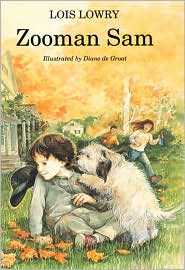
Books 2 & 3 for 2009: Zooman Sam and All About Sam by Lois Lowry

I, like thousands of readers all over the world, am a big fan of the wacky Krupnik family from the Anastasia series, whose books are among the American Library Association’s 100 Frequently Most Challenged Books, because (according to Wikipedia) of “references to beer, Playboy magazine, and a casual reference to a character who wanted to kill herself.” Apparently it was also criticized for one of the funniest books in the series, “Anastasia at this Address,” where Anastasia replies to a personal ad and lies about her age (and invents a fantasy life too) to an older man — it sounds bad but it’s actually quite innocent and funny as hell.

After 9 Anastasia books (I wish there were more), Lowry moves on to a series featuring Anastasia’s younger brother, Sam, starting with All About Sam. Zooman Sam is the most recent
addition to the series.

Aside from most of the Anastasia books, I have both Attaboy Sam, and See You Around, Sam!
on my shelves, and I was glad to get both All About Sam and Zooman Sam in one weekend
(Book Sale and then Chapters and Pages).

All About Sam is about Sam’s life story told from his point of view, mostly featuring events that happened throughout the Anastasia series. Meanwhile Zooman Sam is about Sam’s Future Career day and how he wants to be a zookeeper.

They’re short reads (not very short — they’re still chapter books but one-sitting short), and
although I miss Anastasia’s whacked out (and sassy!) point of view, Sam’s candidness and own whacked-out point of view are endearing too. It’s also delightful to see that Anastasia and Steve Harvey are getting on very well, and Myron and Katherine Krupnik are still the coolest parents ever!

***
My copies: both Dell paperbacks

My rating: All About Sam 3/5 stars, Zooman Sam 4/5 stars

Photos courtesy of Barnes & Noble

Book 1 for 2009: Lionboy by Zizou Corder

I’m not a big fan of talking animals, but this series has been sitting in my TBR shelves for quite a while and I figured it was about time I read it.

Lionboy is a fantasy series about Charlie Ashanti, a nine-year old boy who can speak Cat, who must rely on this special talent and his wits to save his kidnapped parents.

Lionboy is set sometime in the future, when the world’s petroleum resources have all run out. The world reverts to sea travel as the main form of overseas transport, and everything runs on alternative energy; only the very powerful are allowed to have cars. The world is ruled by a superpower known as the Empire, asthma is a widespread condition (blamed on cats) and a pharmaceutical giant known as the Corporacy controls the world’s major industry. Charlie’s parents have discovered the cure for asthma, and the Corporacy has held them captive to safeguard their business.

Although not as engaging as I would have liked it to be, Lionboy, the first book in the series, sustains the interest, especially as Charlie stows away on a circus ship, the Circe, which houses Thibaudet’s Royal Floating Circus and a host of interesting personalities. Charlie forms a friendship with six circus lions and helps them escape, as he gets one step closer to finding his parents.

The cats are particularly amusing, especially the strays, because of their different personalities — a prissy French cat, a wisecracking Russian cat, and an ingenious marmalade. Even the lions are distinct, although they’re all regal.

It’s also worth noting that Zizou Corder is actually the mother-daughter team of English novelist Louisa Young and Isabel Adomakoh Young (middle school age). It’s a good collaboration for an exciting adventure, but also touches on important issues such as the environment, race, and prejudice.

***
My copy: Puffin trade paperback, mooched from Singapore

My rating: 3.5/5 stars

Photo courtesy of http://www.mrbsemporium.com/frontcovers/Lionboy1.jpg