Shopaholic hits the big screen

(Quick post before I head to a party)
My sisters and I caught the Confessions of a Shopaholic movie on the late night screening last Thursday.
I was not particularly excited to watch this because the Shopaholic series is one of my favorites, and I find Sophie Kinsella one of the smartest chicklit writers I’ve read, and I did not have high hopes for the adaptation.
It was forgettable, both as an adaptation and a chick flick. If I had not read the book, I would have found the movie mildly entertaining but not a must-see, and the whiny Isla Fisher in tacky clothes is more annoying than endearing.
But since I read the book, I have more things to nitpick about the movie:
*** SPOILER ALERT***
1) It’s set in New York and only Luke is British. This is major beef because much of the book’s charm comes from its British crispness.
2) They combined plot elements from Shopaholic Takes Manhattan (Brit: Shopaholic Abroad) to make it easier for them to just move to the 3rd book if they make a sequel. They’ve totally eliminated the pr crisis with Flagstaff life (see #3); the Tarkie-Bex subplot; and all of Becky’s harebrained plans to “economize” — the frames, the curry (I loooooved the curry episode, I think it was one of the defining moments in the book); the headhunter applicaton where she bluffs Finnish — most of the hilarious bits in the book, mainly.
3) Luke is the editor of Successful Saving instead of having his own PR firm (he does set it up by the end of the movie), and Becky takes the job (in the book she already works there) as a stepping stone to the fashion magazine where Alicia Bitch Longlegs (in the book, she is on Luke’s PR team) works.
4) The scarf hullabaloo. Not a major issue, but it was an iridiscent blue-gray in the book, not green, and Becky did not write a column entitled Girl in the Green Scarf (well it does sound better than Girl in the Blue-gray Scarf). The scarf was a significant item that made it all the way to the fifth book, and I think they should have stuck to the 20-quid scene in the book where Becky accidentally blurts it out in the press conference.
5) What was up with the mannequin hallucinations?!?
and 6) Isla Fisher really does not do Becky Bloomwood justice.
Oh well, I guess that’s Hollywood for you.
***
My rating:
Movie 2/5 stars; Book 5/5 stars

V-day reading (Book 30! Woot!)

Love Story by Erich Segal
Book #30 for 2009
Book #4 for Diversity Challenge (Reading group requirement)

Reading Erich Segal’s Love Story was like running into an old friend I hadn’t seen in a long time.

It must be ten years since the first time I read this book, back in second year high school, a time when all we ever wanted to read were books about undying love, books that make us gush and sigh and cry and wish that someday we’d be able to experience the things we read about (oh, but that is another story…).

I was actually dreading reading this again, because I felt I’d outgrown it already, and if it were not for the Flips Flipping Pages discussion, I wouldn’t have read it again, because the mere sight of the book actually had me snorting in derision.

I didn’t have a copy of the book, and I’d seen dozens of copies of it at Book Sale in the past, but of course, as luck would have it, no copies were to be found now that I needed it. I’d once again proven the law of Book Sale: the amount of urgency applied in seeking out a specific title at book sale is directly proportional to the possibility that it (and multiple copies, too) will turn up when you no longer need it or already have a copy. I ended up mooching a hardcover copy (yes, of course, if I have to mooch internationally, I’d rather have a hardcover) from California, and got it just in the nick of time, the day before the discussion.

To my surprise, I got through the whole book without a single derisive snort! Rereading it was much better than I expected. Though I wasn’t reading it with the eyes of a thirteen-year old girl anymore, I actually still liked it.

It’s the simplicity of the story that has given this book its staying power: rich boy meets poor girl, they fight for their love, but the triumph is short-lived as the girl gets sick and dies tragically young (oops, is there anyone who doesn’t know how Love Story goes?). I agree with our discussion moderator, Czar, when he said that Erich Segal knew when to rein himself in, just short of the point of being mushy.

Like Jenny, I love Oliver Barrett III’s name and numeral (hahaha!) — who wouldn’t? He’s smart, rich, handsome, athletic, and even his rambunctiousness adds to his charm. Jenny Cavilleri, on the other hand, is exactly the girl who can whip his cute little tosh into submission, with her snooty demeanor, smart-ass mouth and artistic temperament. The highlight of the book for me was the playful banter between the two, and the fact that Jenny always got the final word.

Yesterday, we also watched the movie and I was surprised to find out that the screenplay actually came before the book, and Segal actually just wrote the book to promote the movie. The book was mostly faithful to the movie, except for the point of view, but I felt that the final scene was better in the book.

One of the points raised in the discussion was that the movie was actually more realistic, because relationships (in this case, Oliver and his dad’s relationship) don’t get fixed just because someone dies, and closure doesn’t come that easily. While I see their point and agree with it in essence, I don’t think that was what the book meant to say. In the book, as Oliver cries in his father’s arms, I didn’t see Jenny’s death as a cure-all for their relationship, but rather an opening to reach out to each other, and merely the start of Oliver’s coming to terms with Jenny’s death.

“Love means never having to say you’re sorry” (note: in the book it’s actually, not ever, not never) is probably one of the most trite expressions about love today, and while I am not in the position to debate its meaning, I guess it’s not the line’s fault that several generations of readers (and film viewers) all over the world have used it for almost 4 decades now.

I didn’t expect to say this, but I’m definitely keeping this book.

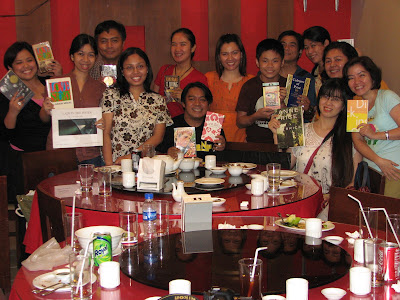
Flippers celebrate V-day with Love Story at Red Palace!

***
My copy: hardcover first edition with dustjacket
My rating: 4 out of 5 stars

Charmed.

(This post is rather lengthy, I know — I’ve just wanted to write about this book for so long!)
There was one book I forgot to list down among my top picks for 2008, one of the buzzer beaters, which I finished on the 28th of December: I Capture the Castle by Dodie Smith.

Dodie Smith’s more famous work is the children’s story The 101 Dalmatians, but before that, she wrote a novel entitled I Capture the Castle in 1948.

I only learned about I Capture the Castle because J.K. Rowling named it as one of her favorite books — I love the books she recommends; my cousin and I discovered the Cirque du Freak series also because JKR raved about them.

I found a fairly new copy at Book Sale (the best! I swear!) last year, but it took a few more months before I finally found an opportunity to read it without interruptions — on my holiday trip after Christmas, where I indulged in a lot of fresh air and four days of reading bliss.

Meet the Mortmains

I Capture the Castle is the journal of 17-year old Cassandra Mortmain, who lives with her eccentric family in a crumbling English castle in the countryside in the 1930s.

The Mortmains are dirt-poor but such characters! Cassandra’s father (she calls him Mortmain) is something of a one-hit wonder writer. His first book, “Jacob Wrestling” was a big hit in the past decade, prompting him to move his family to the countryside for inspiration, although it never came — he has a ten-year old case of writer’s block. The Mortmains have a 40-year lease on the castle, but over the years, they have had to sell off all the good furniture just so they can buy food.

Cassandra’s mother has passed away early on, so her father remarries the young Topaz, who is well-meaning but flighty. She is a model who poses nude for artists, and habitually “communes with nature” (er, frolics in the meadow) in nothing but hipboots.

Cassandra’s elder sister, Rose, is the family beauty (golden haired and rosy-cheeked) who despairs of being poor and wants to hook a rich husband (her main fantasy is to live in a Jane Austen novel). Their younger brother, Thomas, is often away at school on a scholarship courtesy of the local vicar, and although he doesn’t appear often, he is quite endearing as well.

The family also includes Stephen Colly, the son of one of their old servants, who continues to help out around the house even though they have nothing to pay him and he ends up getting a job outside to contribute towards the family budget. Stephen also happens to be in love with Cassandra, but unfortunately, Cassandra loves him like a brother.

Finally, there is the snowy-white bull terrier Heloise, who rounds out the family picture.

Things change for the family one fateful night, in a rather comical episode. Rose is overcome with despair about being poor, and attempts to do a Faust by hauling herself up on a pulley to wish upon the gargoyle mounted high on their kitchen fireplace. That same night, they meet the Cottons — the rich family who are now the landlords to the castle, including their two bachelor sons, Neil and Simon.

I will have to stop there before I reveal any more of the story, but more amusing episodes follow, and even as I’m writing this, I can’t help but laugh at the memory — the bathtub confrontation, the fur incident, the two wireless radios, the lockup in the tower… Equally plentiful are the sigh-inducing moments that make the book a throwback to 19th century English novels like Pride and Prejudice, Wuthering Heights, and Jane Eyre.

Cassandra and Rose also remind me of the March girls in Little Women, especially when they had to dress up for dinner at the Cottons’. Rose reminds me of Meg and Jo, when they had to go to a party and had to make do with shabby gowns. The sisters also keep an old dress form in their room, christened as “Miss Blossom,” whom they pour their hearts out to whenever they’re troubled.

A heroine like no other

I Capture the Castle is one of this century’s most beloved novels, and now I know why — Cassandra Mortmain can charm the socks off a stone monument!

“I write this sitting in the kitchen sink. That is, my feet are in it; the rest of me is on the draining-board, which I have padded with our dog’s blanket and the tea-cosy.”

This is how the novel begins, and it sets the tone for the rest of the story. It’s Cassandra’s voice that is the cornerstone of this book, and it reveals a guileless, intelligent, and feisty teenage girl, one of the most fascinating characters I’ve ever had the pleasure of reading about.

She says the most original things, and outside of EM Forster’s A Room with a View, I don’t think I’ve ever read so many lines that spoke to me all in one book! Most of the lines that struck a chord with me in this book were Cassandra’s random thoughts — some plain amusing, some thought-provoking, and others just overflowing with emotion. Her uncanny wit and sharp perception make the book such a delightful read.

Here are some of my favorite lines from the book:

On life:

“Noble deeds and hot baths are the best cures for depression.”

“Time takes the ugliness and horror out of death and turns it into beauty.”

“I wonder if there isn’t a catch about having plenty of money? Does it eventually take the pleasure out of things?”

“I should rather like to tear these last pages out of the book. Shall I? No-a journal ought not to cheat.”

On contemplation:

“Contemplation seems to be about the only luxury that costs nothing.”

“I have found that sitting in a place where you have never sat before can be inspiring.”

“I was wandering around as usual, in my unpleasantly populated sub-conscious…”

“I have noticed that when things happen in one’s imaginings, they never happen in one’s life.”


On family:

“The family, that dear octopus from whose tentacles we never quite escape, nor in our innermost hearts never quite wish to.”

On writing:

“I only want to write. And there’s no college for that except life.”

“Only half a page left now. Shall I fill it with ‘I love you, I love you’– like father’s page of cats on the mat? No. Even a broken heart doesn’t warrant a waste of good paper.”

I hope these beautiful lines tempt you to read the book, because I don’t know anyone else who has read it, and I’d love to talk about the book with someone :)

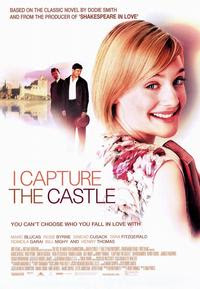
There is a 2003 movie on the book, but I’m afraid to watch it because it might ruin the book for me. If anyone has watched it, please let me know how you found it, especially if you’ve read the book too.

***
My copy: trade paperback, bought at Book Sale for P170 (yes, I shelled out P170 at Book Sale for this — so much worth it!)

My rating: 5/5 stars
Nothing like the magic of reading the book

(the review I wrote, published today in Manila Bulletin, Students and Campuses section)

The film adaptation of Cornelia Funke’s fantasy bestseller Inkheart hits the big screen this weekend, after almost two years of giddy anticipation for the book’s fans.


Produced by New Line Cinema, the outfit that brought to life J.R.R. Tolkien’s The Lord of the Rings trilogy and Philip Pullman’s The Golden Compass, and packing an all-star cast led by Brendan Fraser (Mortimer “Mo” Folchart), Paul Bettany (Dustfinger), Helen Mirren (Elinor Loredan), Andy Serkis (Capricorn), Jim Broadbent (Fenoglio), Sienna Guillory (Resa), and newcomer Eliza Bennett (Meggie Folchart), the theatrical release of Inkheart promised to be a feast for fantasy lovers.

A book about a book
Inkheart is the first book in the Ink Trilogy, a series of fantasy novels by the famous children’s book writer, Cornelia Funke, often tagged as Germany’s answer to J.K. Rowling. Funke has written well-loved fantasy stories such as Dragon Rider (1996), which was on the New York Times bestseller list for 78 weeks, and the Dickensian The Thief Lord (2000), which immediately cornered the #2 spot on the New York Times bestseller list for 19 weeks.

First published in Funke’s native German (originally entitled Tintenherz), Inkheart was published in 2003 by Scholastic (translated by Anthea Bell), and went on to gain worldwide readership, critical accolades, and bestseller status, with the sequels Inkspell (2005) and Inkdeath (2008) following suit.

Inkheart revolves around an obscure book, also entitled “Inkheart,” a medieval tale that becomes entwined with the lives of the Folchart family.

Meggie Folchart is a bookbinder’s daughter, and has spent all twelve years of her life surrounded by books. One thing puzzles, her however: as much as her father shared her love for books and reading, he has never read her a story. One fateful night, a mysterious stranger named Dustfinger and his horned marten Gwin show up at their house, and Mo’s secrets begin to unravel.

Nine years ago, Mo read the book “Inkheart” to his wife Teresa and three-year old Meggie, and suddenly, the characters from the book turn up in front of them: the black-hearted Capricorn and his henchman Basta, with the fire-eater Dustfinger in tow. Mo discovers he has an unusual talent: he can read things in and out of books. Unfortunately, this talent came at a price – as the “Inkheart” characters jumped out from the pages of the book, Teresa disappeared into them.

Mo manages to ward off the villains and saves Dustfinger’s life, but he cannot read Teresa out of the book. Capricorn, however, needs Mo to carry out his dastardly plans, so Mo leads a nomadic lifestyle to escape from his clutches.

Soon after Dustfinger returns into the Folcharts’ lives, Capricorn soon catches up with them and keeps Meggie captive to get Mo to cooperate. The fate of the Folcharts lies with Meggie, and it’s up to her to defeat Capricorn.

Inkheart is a book lover’s fantasy, drawing on the power of the written word and teeming with a love for books and reading.

The chapters are marked by passages from well-loved books, including Shel Silverstein’s Where the Sidewalk Ends; R.L. Stevenson’s Treasure Island; J.M. Barrie’s Peter Pan; T.H. White’s The Sword in the Stone; Eva Ibbotson’s The Secret of Platform 13; Roald Dahl’s The BFG; J.R.R. Tolkien’s The Hobbit and The Lord of the Rings; Maurice Sendak’s Where the Wild Things Are; William Golding’s The Princess Bride; C.S. Lewis’ The Lion, the Witch, and the Wardrobe; and many more.

Tall order
As much as the movie tried to capture the magic of Inkheart, hardcore fans of the book will be disappointed as it leaves out the richness of details that made the book an enchanting page-turner. The film does not sufficiently establish the infectious, and almost-fanatic celebration of the written word that was the cornerstone of the series, failing to bring it to a level beyond the run-of-the mill adventure flick.

Certain liberties were also taken in the screenplay that are glaringly different from the book, particularly in the final action and the resolution, which also makes it harder to reconcile the film with the next book in the series.

It is interesting to note that the character of Mo Folchart was modeled after Brendan Fraser. The Inkheart movie producers wanted a bigger star for the role, but Funke had her heart set on Fraser, as she always imagined him as Mo. Funke even dedicated Inkspell to him and sent him a signed copy. Fraser soon found himself bringing Mo to life in the trilogy’s audiobooks, and finally, in the film adaptation.

The hitch, however, is that Fraser fails to deliver. He sticks out like a sore thumb in the film, especially since his American accent is starkly different from his onscreen daughter’s (and the rest of the cast’s) crisp British tones.

Characterization was also lacking, as Fraser did not look bookish enough in playing a man who loves books. Neither did he embody the reverence of a book binder stroking the pages of old tomes in need of new dress, nor the hunger of a bereaved husband who has spent the past nine years in search of a copy of the obscure “Inkheart” in the hopes of reuniting his family. Fraser is too commercial, calling on the trademark treatment he has given roles in a long list of action-adventure starrers, unable to give the sensitivity required for Mo’s character.

Eliza Bennett makes a dismal Meggie — not bad, but not memorable either; and Andy Serkis is a tad too sleek and sinister for Capricorn, who is supposed to be a one-dimensional book villain that is wicked simply for the pleasure of being evil.

Saving the film are the stellar performances of the support cast, in particular Helen Mirren as the book-mad Elinor, perfectly capturing the batty but lovable old aunt; Jim Broadbent as Fenoglio, the author of Inkheart who is fascinated at seeing his characters brought to life; and Paul Bettany as the distraught Dustfinger, the fire breather who wishes to return to his world and change his fate.

Ultimately, perhaps making a movie about the magic of reading books is an impossible task, as the principle is contradictory in itself. Nothing beats the experience of getting lost in book, oblivious to one’s surroundings, turning the pages one after the other as the adventure takes place in one’s imagination, enjoyed for the moment but remembered long after.

***
Postscript

Reread Inkheart for the review, Book #17 for 2009.

While my favorite Cornelia Funke book is The Thief Lord, I’ve always found Inkheart fascinating. The book may be long-winded for a lot of readers — yep, much of the book is spent going in and out of Capricorn’s village — but the escapist in me relished it for the adventure it offered, the wonderful scenery, and the high it gave me every time books were being described :)

My rating: the book 4/5 stars; the movie 2/5 stars

My copy: hardcover mooched from the US

Be careful what you wish for…


The Picture of Dorian Gray by Oscar Wilde

Book #12 for 2009
Euro Book #2 for FFP Diversity Challenge

In Jasper Fforde’s The Fourth Bear, one of the subplots is a reference to Oscar Wilde’s only novel — The Picture of Dorian Gray, and it definitely got me curious.

Then I came across the Viking Whole Story edition at a Book Sale branch – illustrated by Tony Ross (of Francesca Simon’s Horrid Henry series) in addition to the pictorial annotations on the story’s historical, cultural, social, geographical, artistic, and scientific context. I had to pass on it because it cost nearly P400, but it was one of the first books I mooched on BookMooch, and I had to wait a couple of months for it because I had to angel mooch it from the US, etc., etc.

I always thought it was a Faustian novel in the literal sense. You know, the “pact with the devil” type of thing, like in Bedazzled or in Shortcut to Happiness or I was a Teenage Faust (LOL, I think I saw that one thrice).

The young Dorian Gray, after sitting for a painting, realizes (after Harry eggs him on) he’ll never be as beautiful, and utters a wish for eternal youth and beauty — that the painting would take all the beatings of time and age instead of having them on his person. And then it just happens – he has indirectly traded his soul for the luxury of eternal youth.

At 260+ pages and 20 chapters, I thought it would be an easy read, but as I settled into reading, I soon got bogged down by the various ideologies Oscar Wilde was espousing.

It’s the confluence of Wilde’s philosophical statements that to a degree obscure the otherwise simple storyline. As a homosexual living in Victorian times, Wilde clearly had his issues.

First was his overarching philosophy on art, leaning towards aestheticism, or “art for art’s sake.” Wilde even writes a
lengthy preface to explain his perspective,that art should have no other purpose than being beautiful, which offended sensibilities in a time when art was used as a tool for education and moral guidance.

Wilde proclaims this philosophy every chance he gets within the novel but still ends up contradicting himself, as his story is a cautionary tale of what could happen when the lines between life and art are blurred, and the high price to pay (in Dorian’s case, his soul) to achieve beauty.

Aside from that, Wilde also makes a social commentary on how superficial his circle was, and how people were often judged by their physical appearance (e.g. Dorian was the picture of purity and innocence, ergo no one believed he could’ve done the black deeds he was rumored to have done).

He also warns of the negative effects of influence, whether direct (as in the case of Lord Henry Wotton) or indirect (via the yellow book), and emphasizes the need for individualism and thinking on your own.

Finally, it is pretty hard to miss the homoeroticism in this book, as from the first chapter, it is clear that there was a love triangle of sorts between Basil Hallward, Dorian Gray, and Harry Wotton, and he wanted to justify homosexuality in the novel.

It was really love— it had nothing in it that was not noble and intellectual. It was not that mere physical admiration of beauty that is born of the senses, and that dies when the senses tire. It was such love as Michelangelo had known, and Montaigne, and Winckelmann, and Shakespeare himself

Wilde believed that homosexuality was not unnatural and was an indication of refined culture, as in the tradition of other great men. In the biography included in the book, it states that Wilde was tried for sodomy.

It is obvious too, that Wilde did not care much for women, as the novel is highly misogynistic — all the women characters are silly and underdeveloped. In fairness though, Sybil Vane is effective in establishing the ill effects of placing vanity above virtue.

While Wilde was a major proponent of aestheticism as he struggled to free himself and his work from the confines of Victorian society, he also wanted to push his own doctrines, and that was what made the novel as confusing as it was.

Ideologies aside, I liked the novel for its original plot and the final twist (which I don’t want to spoil for anyone). Faustian themes are always fun to read, and I looked forward to the times Dorian would inspect the painting for changes

I also enjoyed The Whole Story edition of the book for Tony Ross’s comical illustrations, as well as the collection of images that explained a lot of the novel’s context, although I think the layout could still be improved, as it was distracting at times.

Took me a while to digest it, but I’m glad I read the book — I just googled for film versions and there is a Dorian Gray movie coming out this year, and it promises to be a good adaptation, judging from the cast: Colin Firth as Lord Henry Wotton (rats, he’s always doing gay roles now); Ben Barnes (Prince Caspian) as Dorian Gray; and Rachel Hurd-Wood (from Perfume) as Sybil Vane. It’s a British production; I do hope they show it here.

***
My copy: full color paperback, mooched from the US

My rating: 4/5 stars