
 History was the topic of the May book discussion for Flips Flipping Pages, and because I’d been reading the novels Noli Me Tangere and El Filibusterismo, I chose to read a book about their author, national hero Jose Rizal. Luckily I had a copy of Lolo Jose by Rizal’s own grandniece Asuncion Lopez Bantug.
Lolo Jose (book #81 of 2009) is an “intimate and illustrated portrait of Jose Rizal,” is a one of a kind biography of Rizal, culled from the Rizal family lore and personal anecdotes. “Lolo” is the Filipino word for grandfather, and the book is entitled as such because it paints a different picture of Rizal, reminding us that Rizal was not born a legendary hero, that before he became that figure mounted in a glorious pedestal in a park now named after him, he was a son, a brother, a friend, a scholar, and a leader.
Bantug states in her introduction:
“Here is the Jose Rizal I met and learned to love from all the anecdotes told to me since childhood. Here is the Jose whom the older brother he called ‘Nor Paciano led and guided with unflagging and perceptive devotion, the “little brother” whom my Lola Sisa (Narcisa) loved with passonate unquestioning loyalty, the little playmate who was teased and ordered about on errands by Lola Biyang (Maria) and who played practical jokes on her and Panggoy (Josefa), the fond brother who shed his first tears over the death of little sister Concha. Here is the brother, now grown into manhood, on whose unfailing support Lola Lucia could turn to in times  of stress, who stamped his feet and almost cried in grief and frustration when he could not prevent Lola Pia (Olimpia) from dying in childbirth, who was always quick to show gratitude especially to Lola Neneng (Saturnina) and Lola Sisa who could deny him nothing. Here is the solicitous big brother to younger sisters Panggoy and Trining (Trinidad), whom he taught French and English, and to whose wise counsel they listened with respectful attention and who alternately pampered and tenderly chided baby sister Choleng (Soledad).
Here is a son, brother, uncle, mentor, friend, leader — aye, even a young, susceptible swain, always a lover of beauty in all its forms.
I want the young to know that no man is born a hero…I hope that after reading about the young Jose, their inquisitive nature roused, they will want to know about Rizal the Man and Patriot. And I hope that once their interest is stimulated, they will yearn to know more about the hero and martyr. Then they can pursue their reading to include all the well-known biographies written by our eminent scholars who present Rizal in all his different aspects. “
The book was actually first published in the ’80s by the Intramuros administration, but what makes this 2nd edition special is the visual showcase: over three hundred historical photos and reproductions. The appendices are also chock-full of important information: a timeline covering Rizal’s life (1861-1896)and beyond — when he was proclaimed national hero (1901), the Rizal Monument was unveiled (1912), and Rizal was made part of school curricula (1956); a catalog of Rizal’s artworks; important letters; a comprehensive bibliography of Rizal’s written works; a list of readings on Jose Rizal; and the Rizal family genealogical charts.

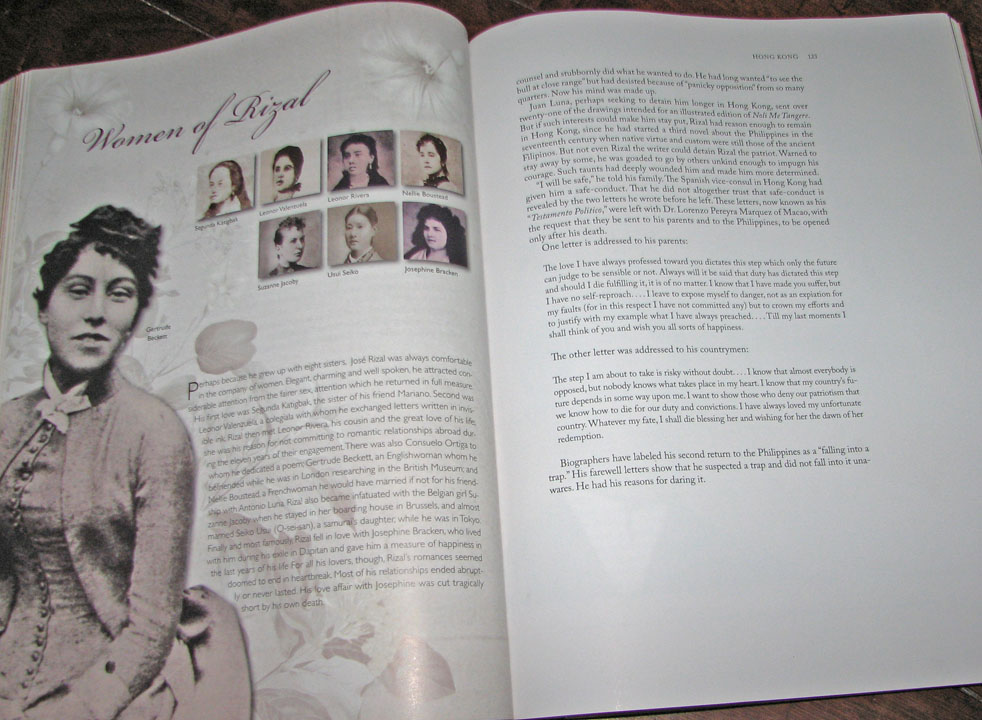
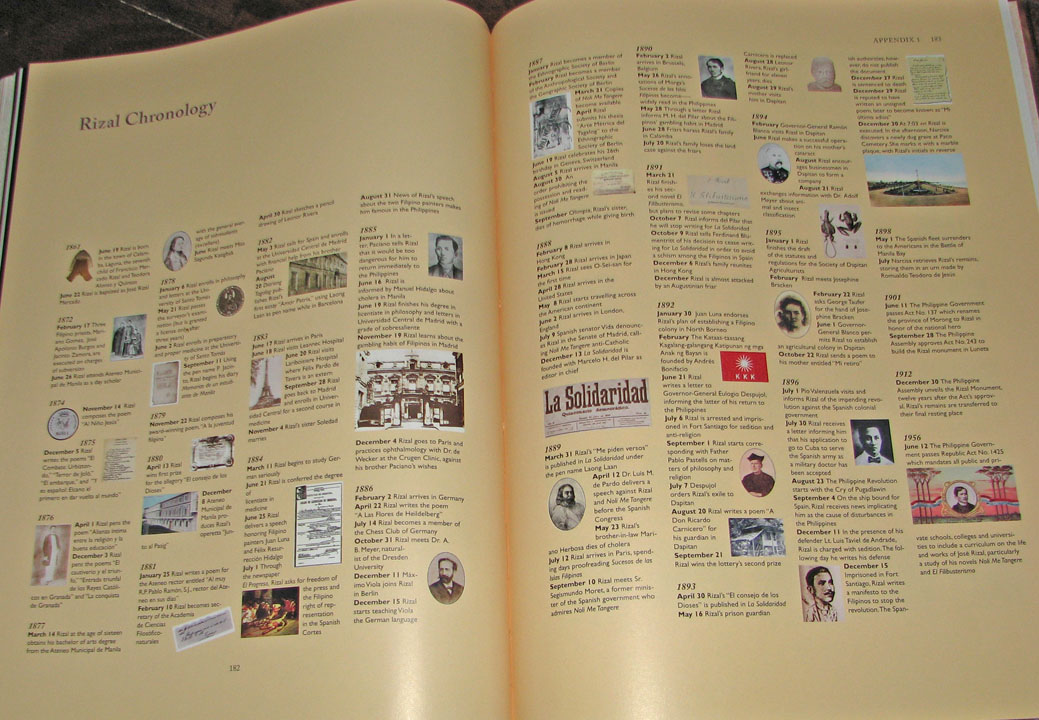

I love this book not only because it is beautifully produced by Vibal Foundation (the first book in their Filipiniana Clasica series, which aims to uphold the continuity of the Filipino reading canon), but because it provides great insight into Rizal and reveals stories and information about Rizal that do not appear in any other Rizaliana books and writings.
Earlier, before the discussion, a few Flipper friends — Marie, Cecille, MayD, Oel, and Didi (who is a real live princess from the Sultanate of Sulu, no kidding!) went walking around Intramuros (a walled district of Manila which used to hold the seat of power in the Spanish regime) and went to Fort Santiago, where Rizal spent his last days before he was executed.
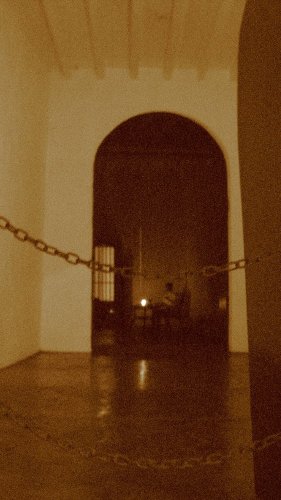
- Rizal’s detention cell
I felt a sense of reverence tracing his footsteps (and there are actual brass footprints that mark the path), and as we went around the detention cell that has been converted into a museum about him, I was able to share with my friends some bits of knowledge I got from the book.

- Rizal’s final walk
The discussion that followed in the afternoon was one of the best our book club has ever had, which is fitting, I think, as this marks our second year into our monthly book discussions. We all read different history books on a variety of subjects and time periods, and it was a lively discussion, held in a place steeped in history.
This is the last stop in my Rizaliana phase this year (I think), and it has been very rewarding. I’ve always loved Rizal — and not because he’s the most familiar hero to me because he’s a part of every Filipino’s education, although that helps — but because I really admire him for being a Rennaissance man (and I’m a sucker for overachievers), and I loved getting to know him more through his works and his family stories this year.
And, as cheesy as it sounds, he makes me proud to be Filipino. Rizal’s legacy lives on.
***
my copy: paperback (although I am drooling for the hardcover edition, which comes with the Codex Rizal, a cd-rom containing a photo gallery, the full text of Rizal’s novels and some of his works, and important writings on Rizal).
my rating: 5/5 stars
*cover photo from Vibal Foundation
