Shamanka!

Rum-pa-pum-pa-pum-pum! Rum-pa-pum-pa-pum-pum! The drumming sound was driving me crazy. Maybe it was a combination of the heat and the fact that I’d been walking frantically for the past half hour, but the faint drumming I’d heard as soon as I stepped into the used bookstore complex was getting louder by the minute.

I rounded the corner and found a bookshop I hadn’t noticed before, small and cluttered, with a labyrinthine arrangement of tall shelves. The Hindu storekeeper beckoned with a smile, so I ventured inside. Instantly, the drumming escalated into a frenetic rhythm: Pum-ba-da-bum-ba-da-pum-ba-da-ba-da-bum! Heart pounding, I backed into a shelf, causing a stack of books to fall on the floor in front of me. On top of the pile was book covered in snakeskin, with a strange word emblazoned on the cover: Shamanka.

Continue reading “Shamanka!”

The Girl from the Chartreuse

I was poking around at an 80% off sale at one of my favorite book stores when I came across a book that caught my eye: The Girl from the Chartreuse by Pierre Peju. I’d never heard of it before, but I thought it would look pretty on my bookshelf (yes, I judge a book by its cover!)  so I decided to add it to my purchases.

The Girl from the Chartreuse (Fr. “La Petite Chartreuse,” translated into English by Ina Rilke) is a French novella that won the prestigious Prix du Livre Inter in 2003, and was made into a French film in 2005.

It starts off ominously: “Five in the afternoon. It will be exactly five in the afternoon under the bitter cold November rain when the van of the bookseller Vollard (Etienne) spurting down the avenue collides head-on with a little girl who runs smack into his path.”

Continue reading “The Girl from the Chartreuse”

Novels in Letters

I love reading epistolary novels — once in a while, it’s really quite refreshing to read narrative that’s broken down into pieces of interesting text (e.g. letters, reports, memos, etc.) rather than plod through long chapters. There’s also the wicked fun of reading other people’s correspondence and attempting to piece together a story based on them.

My favorite epistolary novels include Dracula by Bram Stoker, Griffin and Sabine by Nick Bantock, Daddy Long Legs by Jean Webster,  The Historian by Elizabeth Kostova, and even Meg Cabot’s Every Boy’s Got One. I read a couple more recently: Up the Down Staircase by Bel Kaufman, and Ella Minnow Pea by Mark Dunn.

Continue reading “Novels in Letters”

The Talented Mr. Ripley (Patricia Highsmith)

I was in the mood for a psychological thriller, so I finally unearthed my copy of The Talented Mr. Ripley by Patricia Highsmith. I haven’t seen the 1999 film (with young Matt Damon, Jude Law and Gwyneth Paltrow!), but I’ve been meaning to read the book ever since I mooched a copy, although I still have to “do a Blooey” (er, a term my book club friends coined for my compulsion for “upgrading” mass market paperbacks into trade paperbacks and trade paperbacks into hardcovers) on it — it’s a movie cover and a mass market paperback.

The Talented Mr. Ripley was written in 1955, and is the first of a series of novels featuring a conman and anti-hero named Tom Ripley (the other books being Ripley Under Ground, Ripley’s Game, The Boy Who Followed Ripley and Ripley Under Water). The novel was awarded the Edgar Allan Poe Award by the Mystery Writers of America.

Continue reading “The Talented Mr. Ripley (Patricia Highsmith)”

The Little Prince Deluxe Pop-up

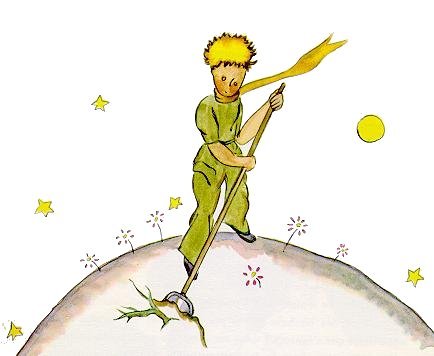
The Little Prince is one of the most meaningful books in my life and I never get tired of reading it. There is also a favorite memory attached to the book — forty four girls in blue and white uniforms, enthralled as one very special teacher read us the following lines:

“Goodbye,” said the fox. “And now here is my secret, a very simple secret: It is only with the heart that one can see rightly; what is essential is invisible to the eye.”

“What is essential is invisible to the eye,” the little prince repeated, so that he would be sure to remember.

“It is the time you have wasted for your rose that makes your rose so important.”

“It is the time I have wasted for my rose — ” said the little prince, so that he would be sure to remember.

“Men have forgotten this truth,” said the fox. “But you must not forget it. You become responsible, forever, for what you have tamed. You are responsible for your rose…”

“I am responsible for my rose,” the little prince repeated, so that he would be sure to remember.

Continue reading “The Little Prince Deluxe Pop-up”