
Our book club’s first unofficial discussion for the year was “House of Leaves” by Mark Z. Danielewski, and I had gotten the book with the intention of joining the discussion last Friday, but I wasn’t able to finish it in time so I stayed home (in fear of discussion spoilers) to make some headway on the book. I did finish it a few days later, and I was well and truly befuddled.
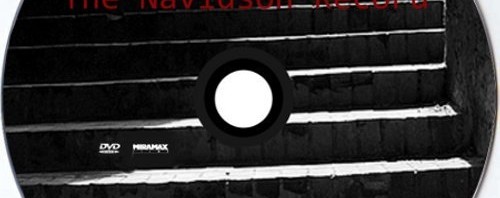
In “House of Leaves,” multiple narratives converge to tell us the strange story of a young man (Johnny Truant) who comes across a manuscript by his old neighbor, Zampano. Zampano has written a study of what appears to be a non-existent film (“The Navidson Record,” a Blair Witch-y documentary by award-winning photographer Will Navidson about a house that is (*gasp*) bigger on the inside, with closets and hallways popping up and disappearing every so often.
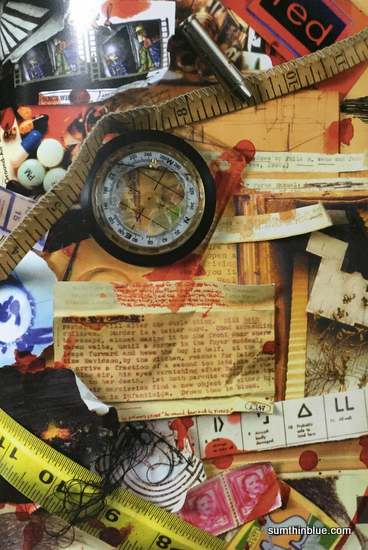
What is incredible about this book is that the maddening tale mirrors the structure of the labyrinthine house. Doors and windows pop up here and there, all iterations of the word house appear in blue, some pages have only a single word in them, and some of the text goes sideways, upside down and every which way.
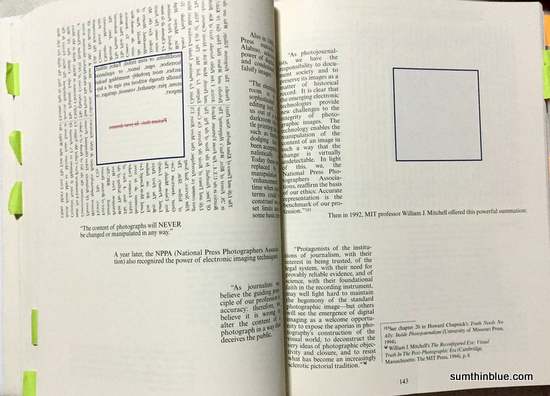
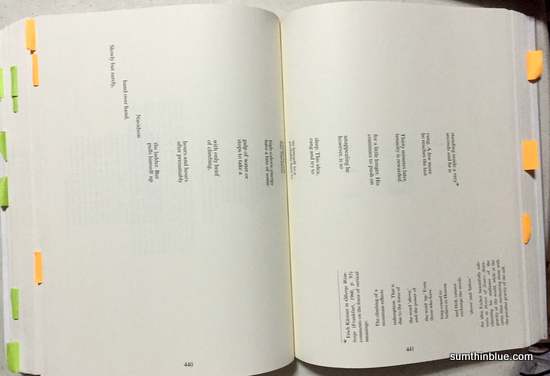
Even the narratives are labyrinthine; you choose one narrative to follow and it leads you on through several pages until you can find your way back to where you last left off. It’s the sort of book you can come back to again and again and glean different meanings with each reading, and your own interpretation of the text becomes adds yet another layer to the whole structure.
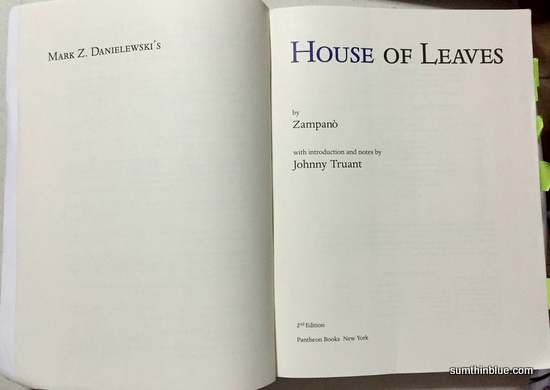
Also amusing is the elaborate setup to create this literary hoax (or is it?) — the physical book is made to appear as Zampano’s actual manuscript, annotated by Johnny Truant; the manuscript contains reviews, interviews and quotes from real-life people and actual publications; and there’s even evidence strewn all over the internet: YouTube videos, clippings, interview transcripts and other ephemera, further blurring the line between fiction and reality.
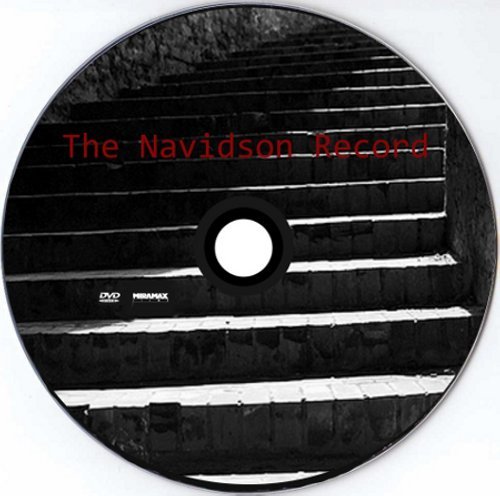
I’m not completely sure I understood the novel in its entirety (has anyone, really?), and I think that’s the point of the exercise, but this book no doubt has some of the most beautiful passages I have ever read in print:
The liquid rises to the rim and then by a fraction exceeds even this limit. Only it does not spill. It holds — a bulge of coffee arcing tragically over china, preserved by the physics of surface tension, rhyme to some unspeakable magic, though as everyone knows, coffee miracles never last long. The morning wake-up call wobbles, splits, and then abruptly slips over the edge, now a Nile of caffeine wending past glass and politics until there is nothing more than a brown blot on the morning paper.
***
This instance in particular proves that beneath all that cool pseudo-academic hogwash lurked a very passionate man who knew how important it was to say “fuck” now and then, and say it out loud, too, relish its syllabic sweetness, its immigrant pride, a great American epic word really, starting at the lower lip, often at the very front of the lower lip, before racing all the way to the back of the throat, where it finishes with a great blast, the concussive force of the K catching up then with the hush of the F already on its way, thus loading it with plenty of offense and edge and certainly ambiguity.
***
Or in other words: shy from the sky. no answer lies there. It cannot care for what it no longer knows. Treat that place as a thing unto itself, independent of all else, and confront it on those terms. You alone must find the way. No one else can help you. Every way is different. And if you do lose yourself at least take solace in the absolute certainty that you will perish.***
Who has never killed an hour? Not casually or without thought, but carefully: a premeditated murder of minutes. The violence comes from a combination of giving up, not caring, and a resignation that getting past it is all you can hope to accomplish. So you kill the hour. You do not work, you do not read, you do not daydream. If you sleep it is not because you need to sleep. And when at last it is over, there is no evidence: no weapon, no blood, and no body. The only clue might be the shadows beneath your eyes or a terribly thin line near the corner of your mouth indicating something has been suffered, that in the privacy of your life you have lost something and the loss is too empty to share.
Is it possible to love something so much, you imagine it wants to destroy you only because it has denied you?
There are passages and passages like these throughout the book, and for most of the time I spent reading, it was the beauty of the writing that kept me from being too agitated at the strange events that were unfolding.
Some bits were pretty scary, too, especially as the effects of the house manifested on all those who entered it, and subsequently, those who had anything to do with the film, including Zampano and Truant, sowing paranoia on the reader’s part (worked on me, haha!):
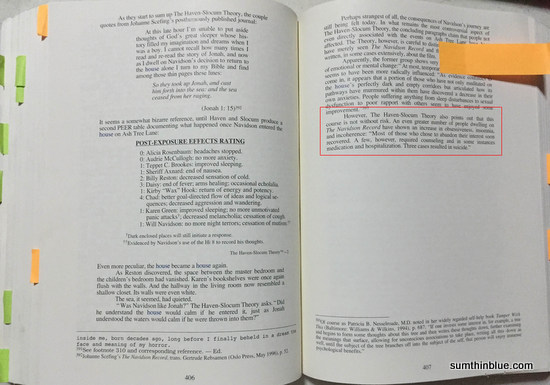
House of Leaves is an exhilarating experience, pushing the boundaries of interaction between the creator of the book, the actual book, and the reader in an ongoing process of giving meaning to a literary work.
Definitely worth a try, and definitely worth future rereadings.
***
House of Leaves, full color edition, paperback
4.5/5 stars
P.S. Here’s another take on “House of Leaves” by my Flipper friend Gege.
One thought on “House of Leaves”